Top industries benefiting from AI Automation For B2B
Wiki Article
Revolutionize Your Business: Exactly How AI Automation Is Changing B2B Workflow
AI automation is reshaping B2B procedures in significant ways. Firms are adopting this technology to simplify operations and boost effectiveness. As jobs become automated, organizations can concentrate on tactical growth instead than mundane processes. The implications of these adjustments are extensive, influencing everything from customer communications to supply chain management. Understanding this change is important, as the future of service rest on the reliable integration of AI into everyday operations. What lies ahead in this progressing landscape?Understanding AI Automation in B2B Context
As businesses significantly look for efficiency, recognizing AI automation within the B2B context becomes important. AI automation refers to the application of fabricated knowledge technologies to enhance and enhance business procedures. In B2B settings, this can materialize in numerous forms, such as automating data access, optimizing supply chain logistics, or boosting supply monitoring. Organizations leveraging AI automation can decrease operational costs, reduce human error, and increase efficiency. Additionally, AI tools can evaluate large amounts of data to offer actionable understandings, enabling notified decision-making. The assimilation of AI into B2B procedures not just transforms standard workflows yet also cultivates dexterity and scalability, enabling companies to adjust to market changes quickly and properly. Embracing this innovation is necessary for staying competitive in today's electronic landscape.Enhancing Consumer Experience With AI
Just how can AI transform consumer communications in the B2B field? AI enhances customer experience by supplying personalized, timely, and effective service. Virtual assistants and smart chatbots can manage queries 24/7, making certain customers receive immediate reactions. Predictive analytics allow businesses to prepare for client requirements, tailoring offerings appropriately. AI-driven systems can assess customer information, allowing for targeted marketing approaches and boosted engagement. In addition, sentiment analysis devices analyze consumer responses, aiding organizations tweak their solutions. By automating routine tasks, AI liberates human resources to concentrate on high-value communications, cultivating stronger partnerships. The combination of AI not only streamlines interaction however likewise builds trust and loyalty, ultimately raising the general consumer experience in the affordable B2B landscape.Enhancing Supply Chain Administration With AI
AI plays a vital role in maximizing supply chain monitoring with anticipating analytics and automated inventory control (Business Process Automation). By leveraging predictive analytics, companies can expect demand fluctuations and readjust their procedures appropriately. Automated inventory systems better boost performance by ensuring stock levels are preserved, reducing waste and enhancing total performance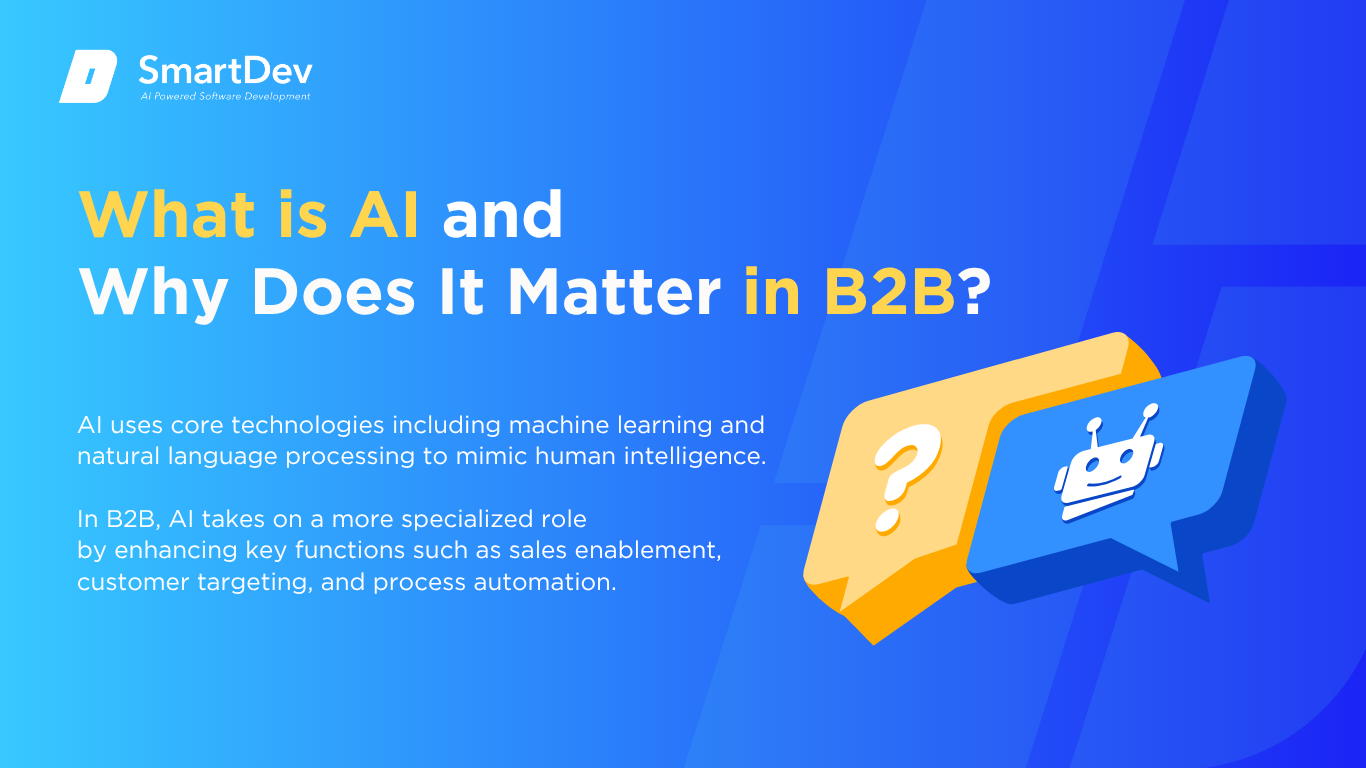
Anticipating Analytics Advantages
While several services face challenges in taking care of complicated supply chains, predictive analytics supplies a transformative solution by leveraging large amounts of information to anticipate patterns and maximize operations. By analyzing historic information alongside real-time inputs, predictive analytics enables companies to recognize patterns and anticipate future demands. This foresight enables for even more educated decision-making, improving effectiveness and reducing expenses. On top of that, organizations can proactively resolve potential disruptions by anticipating supply chain bottlenecks and changing approaches accordingly. The assimilation of predictive analytics not just boosts stock administration yet likewise cultivates more powerful relationships with providers and clients with prompt reactions to market shifts. Eventually, the fostering of anticipating analytics equips organizations to stay affordable in an increasingly dynamic service atmosphere.Automated Supply Control
As businesses progressively rely upon predictive analytics to optimize supply chain procedures, automated inventory control becomes an effective ally in this initiative. By leveraging AI-driven innovations, companies can enhance accuracy in supply tracking, minimize stockouts, and reduce excess supply. Automated systems evaluate real-time information, permitting services to forecast demand fluctuations and readjust supply degrees appropriately. This not only simplifies order fulfillment but additionally boosts capital monitoring by decreasing holding expenses. In addition, AI can identify patterns in acquiring behavior, enabling more enlightened decision-making regarding vendor connections and procurement methods. Inevitably, automated supply control not just improves operational effectiveness but additionally improves client contentment by guaranteeing product accessibility, solidifying its function as a vital component in modern-day supply chain monitoring.Data-Driven Decision Making Powered by AI
In today's competitive landscape, organizations increasingly rely upon data-driven decision-making to improve operational effectiveness and critical preparation. Expert system plays a critical duty in this improvement by analyzing huge quantities of information swiftly and properly. AI formulas recognize patterns, trends, and abnormalities that human analysts might here overlook, enabling companies to make enlightened choices based on real-time insights - AI Automation For B2B. This ability enables companies to forecast market shifts, enhance resource allocation, and customize their offerings to consumer needs. In addition, AI-driven analytics promote threat evaluation and monitoring, guaranteeing that organizations can browse uncertainties properly. By leveraging these innovative devices, businesses not only enhance their decision-making processes but additionally get an affordable advantage in their corresponding markets, cultivating growth and technologyAutomating Recurring Jobs to Increase Efficiency
Simplifying recurring jobs with automation significantly boosts performance within B2B operations. By carrying out AI-driven options, companies can remove mundane activities such as information entry, invoice processing, and report generation. This change allows staff members to concentrate on higher-value tasks, promoting creative thinking and critical thinking. Automating these taxing procedures not just decreases human error but likewise accelerates process efficiency. Furthermore, organizations can achieve constant results and enhanced accuracy, which is crucial in keeping customer complete satisfaction. The combination of automation tools makes it possible for organizations to assign resources better, making sure that groups can respond quickly to market needs. Ultimately, adopting AI for recurring tasks is a strategic step that transforms functional capacities and drives total service development.Integrating AI With Existing Organization Processes
Many organizations deal with challenges when integrating AI with existing business processes. These challenges often originate from an absence of comprehending relating to exactly how AI can complement existing operations. Effective combination requires a thorough analysis of existing operations to recognize locations where AI can add worth. Organizations should additionally assure that their teams are geared up with the necessary skills to utilize AI tools properly - AI Automation For B2B. In addition, seamless assimilation rests on the compatibility of AI innovations with heritage systems. Business often discover it useful to take on a phased method, piloting AI applications in details divisions before a more comprehensive rollout. This technique enables for adjustments based upon initial feedback, assuring smoother shifts and optimizing the possible benefits of AI automation in improving efficiency and performanceFuture Patterns in AI Automation for B2B Business
As B2B firms seek to the future, boosted data analytics is established to play a pivotal duty in driving decision-making procedures. Intelligent procedure automation will certainly also become a crucial fad, boosting and enhancing operations efficiency. These improvements guarantee to improve how services run, ultimately causing even more receptive and dexterous organizations.Improved Information Analytics
While companies increasingly count on data-driven decisions, the function of AI in boosting data analytics is coming to be a lot more essential in B2B procedures. AI innovations facilitate the collection and evaluation of huge datasets, allowing firms to uncover valuable insights that drive strategic preparation. Anticipating analytics powered by AI allows companies to forecast market fads and customer behavior with higher accuracy. Additionally, artificial intelligence algorithms boost data interpretation, determining patterns that human experts may ignore. This brings about even more informed decision-making and optimized source allotment. As B2B companies remain to accept AI-driven analytics, they can expect enhanced functional effectiveness, enhanced customer experiences, and an one-upmanship in the marketplace. The future of information analytics in B2B pivots on incorporating sophisticated AI abilities.Smart Process Automation
Smart Refine Automation (IPA) is poised to revolutionize B2B procedures by effortlessly incorporating AI technologies with typical business processes. This innovative method integrates robotic process automation (RPA) with advanced AI abilities, making it possible for companies to enhance efficiency and accuracy. Companies can automate repetitive jobs, such as data access and invoice processing, enabling workers to concentrate on calculated efforts. IPA additionally leverages maker learning and all-natural language processing, enhancing decision-making via real-time data analysis. As businesses significantly embrace IPA, they can anticipate substantial expense decreases and boosted customer experiences. Future fads show an expanding reliance on IPA for scalability and adaptability, placing organizations to thrive in an ever-evolving industry. Accepting IPA will be essential for preserving competition in the digital age.Regularly Asked Questions
What Industries Advantage A Lot Of From AI Automation in B2B Operations?
Exactly How Can Small Companies Implement AI Automation Efficiently?
Small companies can implement AI automation successfully by determining repeated jobs, selecting proper tools, incorporating remedies progressively, educating team, and continually analyzing performance to optimize processes, guaranteeing a smooth changeover and making best use of effectiveness.What Are the Costs Connected With AI Automation Application?
The prices connected with AI automation implementation generally include software purchase, infrastructure upgrades, educating staff, ongoing upkeep, and potential consultation charges. These expenses can vary substantially based on the range and intricacy of the automation remedies chosen.How Do I Determine ROI From AI Automation Initiatives?
To gauge ROI from AI automation efforts, one need to analyze expense financial savings, efficiency improvements, and revenue growth versus implementation prices. Tracking crucial performance signs with time gives important insights into effectiveness and overall roi.What Abilities Are Needed to Handle AI Automation Projects?
Reliable management of AI automation jobs requires skills in project monitoring, data analysis, programs, and comprehending AI innovations. Furthermore, solid interaction, analytic capabilities, and flexibility are necessary for navigating the complexities of such efforts.As services significantly look for effectiveness, comprehending AI automation within the B2B context comes to be essential. The combination of AI right into B2B procedures not only transforms standard workflows but also fosters dexterity and scalability, allowing organizations to adjust to market adjustments quickly and efficiently. While organizations progressively depend on data-driven choices, the duty of AI in improving information analytics is coming to be much more important in B2B operations - AI Automation For B2B. Intelligent Refine Automation (IPA) is positioned to revolutionize B2B procedures by effortlessly integrating AI technologies with standard organization procedures. Efficient administration of AI automation jobs calls for abilities in project administration, information analysis, programs, and comprehending AI technologies
Report this wiki page